Eden Beck · 24 September 2026
Adaptive TTL Adjustments for Balancing Load in Clustered Storage Systems
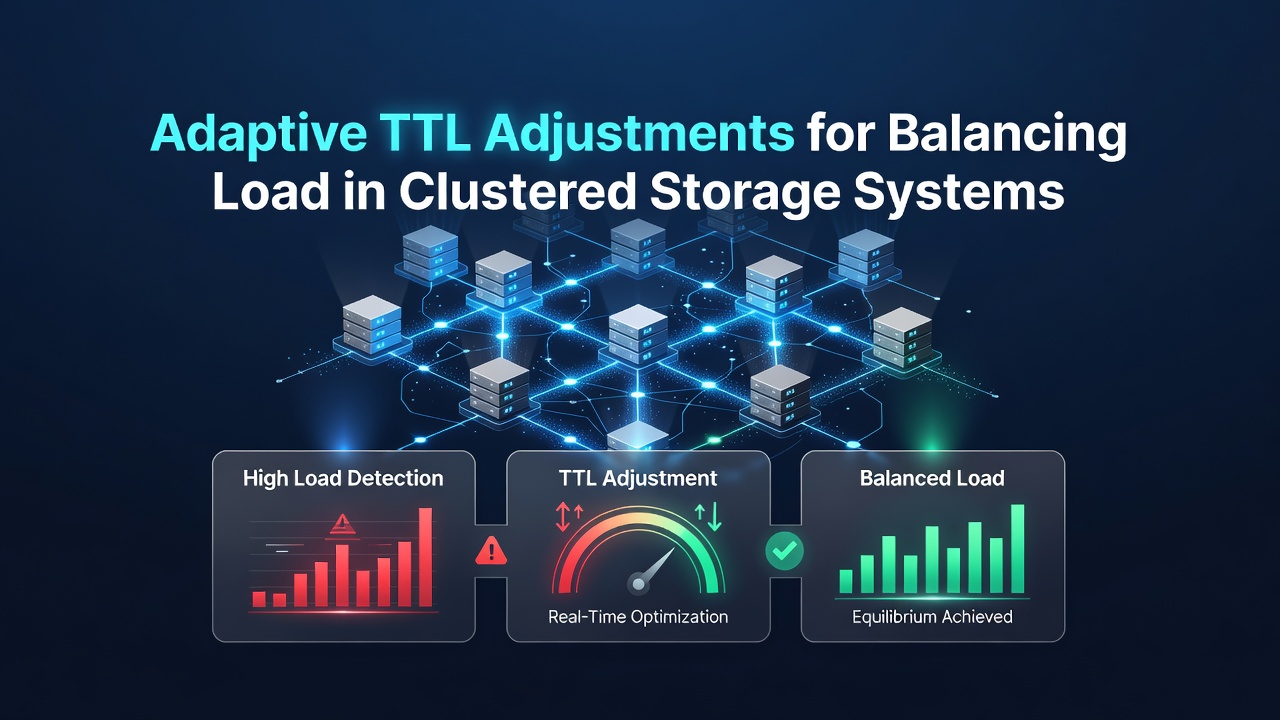
In clustered storage systems multiple nodes coordinate to handle data requests and maintain availability, and adaptive TTL adjustments modify cache expiration intervals according to current load conditions rather than relying on fixed values. Researchers have documented how these adjustments respond to metrics like request volume, node CPU usage, and network latency, allowing the system to extend or shorten TTL periods so that popular data remains cached on less burdened nodes while shifting traffic away from overloaded ones.
Core Mechanics of TTL in Storage Clusters
Time-to-live values determine how long cached entries persist before a node must fetch fresh data from primary storage, and in clustered environments this process influences which node serves subsequent requests. Observers note that fixed TTL settings often lead to uneven distribution because some nodes retain hot data longer than others, creating hotspots during peak periods. Adaptive approaches instead monitor real-time signals and recalculate TTL on the fly, so that when one node approaches capacity thresholds the system shortens its TTL for high-demand objects and prompts neighboring nodes to assume more of the load.
Algorithms typically combine queue-length measurements with historical access patterns, then apply weighted formulas to decide whether to increase or decrease each entry's remaining lifetime. Studies from distributed-systems labs have shown that such calculations can run at sub-second intervals without adding measurable overhead to request paths, because the adjustments reuse existing monitoring data already collected by cluster managers.
Load-Balancing Outcomes Observed in Deployments
Production clusters that implemented adaptive TTL reported more even CPU and disk utilization across nodes once the policy took effect, and figures from a 2025 multi-site evaluation indicated peak-load variance dropped by roughly 30 percent compared with static TTL baselines. The same evaluation tracked tail latencies and found that 99th-percentile response times improved because fewer requests queued behind saturated nodes. These results emerged after operators tuned the adaptation window to match their workload's diurnal cycle, allowing the system to anticipate morning traffic spikes and pre-adjust TTL values the evening before.
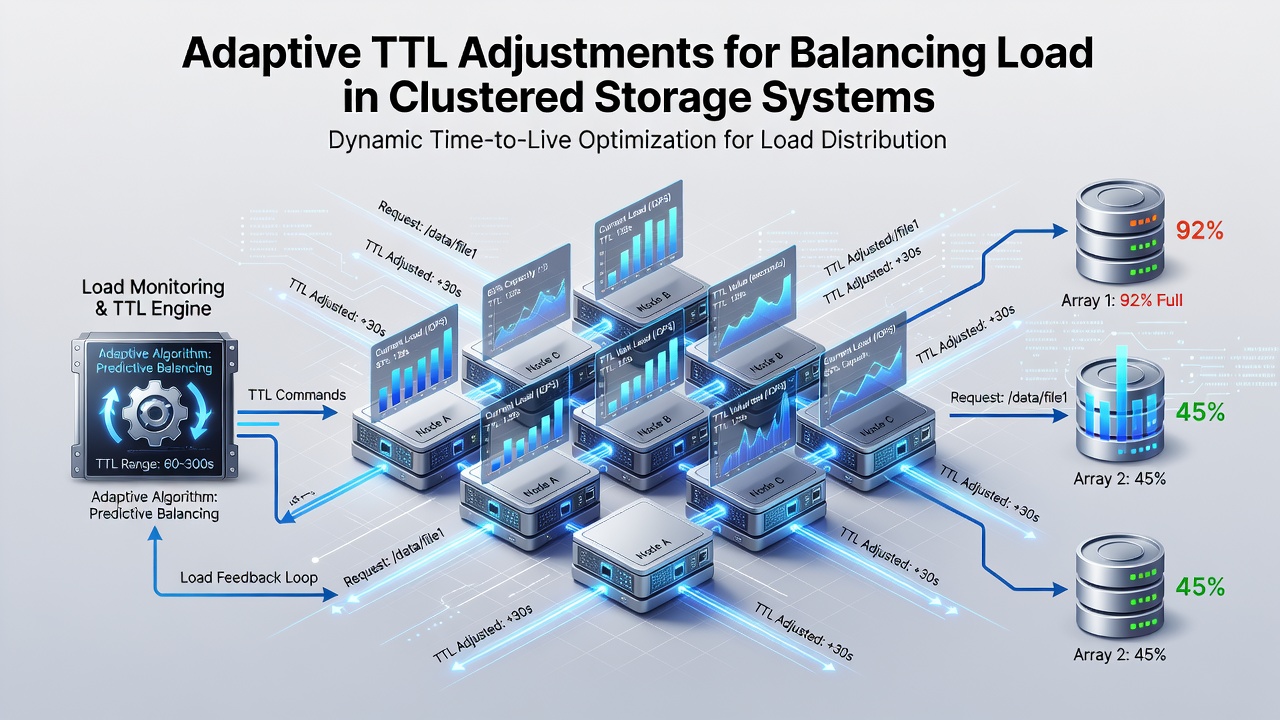
One deployment at a Canadian research-computing facility adjusted TTL ranges between 30 seconds and 15 minutes based on instantaneous request-rate deltas, and the change eliminated the need for manual rebalancing scripts that operators had previously run during quarterly reporting cycles. A separate academic cluster in Australia applied similar logic but incorporated temperature readings from drive enclosures, extending TTL on cooler nodes to reduce power draw while still meeting throughput targets.
Integration with Existing Cluster Protocols
Adaptive TTL logic often sits alongside consistent-hashing rings and gossip-based membership protocols, so changes to cache lifetimes propagate quickly without requiring global locks. When a node detects rising queue depths it broadcasts a compact load vector to peers, and receiving nodes use that vector to recalibrate their own TTL decisions for overlapping key ranges. This decentralized approach avoids single points of control and continues to function during partial network partitions, provided the remaining nodes still share enough load telemetry.
Standards bodies including the IEEE Storage Networking Industry Association have published reference implementations that separate the TTL decision engine from the underlying key-value store, allowing operators to swap in new adaptation policies without recompiling storage daemons. In September 2026 a follow-up interoperability test coordinated across three continents confirmed that clusters running different base storage engines could exchange load signals and converge on compatible TTL values within two gossip rounds.
Measurement and Feedback Loops
Effective adaptation depends on accurate, low-latency telemetry, and clusters commonly expose per-key hit-rate counters plus per-node resource gauges through lightweight APIs. Feedback loops feed these counters into exponential-smoothing filters that dampen transient spikes, preventing the system from oscillating between overly aggressive and overly conservative TTL settings. Data collected over multi-week traces shows that smoothing windows of five to ten seconds strike the best balance between responsiveness and stability for most web-scale workloads.
Operators also track the rate of TTL-induced cache misses to ensure adaptation does not inadvertently increase backend storage traffic. When miss rates climb above a configured ceiling the adaptation layer temporarily widens the allowed TTL range, giving the cluster time to rebalance without overwhelming primary disks.
Conclusion
Adaptive TTL adjustments provide a lightweight, protocol-compatible method for evening out load in clustered storage systems, and evidence from production deployments plus interoperability tests demonstrates measurable reductions in node imbalance and tail latency. Continued refinement of telemetry filters and cross-vendor signaling continues to expand the range of environments where these techniques deliver consistent results.